Veneers in Oxnard CA for Subtle Smile Enhancements
A smile does not need to look dramatically different to feel meaningfully better. In many cases, the most successful cosmetic dentistry is the kind other people cannot quite identify. They notice that someone looks more polished, healthier, more rested, maybe more confident, but they cannot point to one obvious change. That is often the appeal of veneers.
For patients exploring veneers in Oxnard CA, the goal is not always a bright, camera-ready makeover. Quite often, it is more restrained than that. A patient may want to soften a chipped edge, even out a front tooth that turns inward, close a small gap, or cover stains that whitening never touched. Those are subtle refinements, but they can have an outsized effect on how a smile reads in everyday life.
The interesting part is that subtle work is usually harder than dramatic work. A very white, very uniform smile can hide a lot. A natural-looking smile cannot. Small changes have to respect facial proportions, lip movement, age, tooth shape, skin tone, and even personality. Veneers are capable of that kind of refinement when they are planned carefully and used for the right reasons.
Why subtle enhancements matter
People often assume cosmetic dentistry is about vanity or perfection. In practice, patients tend to be much more specific. Someone may say, “I like my smile, I just don’t like this one tooth,” and that is a very reasonable concern. A single darker tooth after old dental work, a minor fracture from years ago, or slight wear from grinding can draw the eye more than most people realize.
Subtle enhancement works because smiles are read as a whole. If one front tooth is shorter, flatter, darker, or slightly rotated, it can disrupt the balance of the entire smile. Correcting that one feature can make the whole mouth look healthier without making it look “done.”
This matters in a place like Oxnard, where patients often want results that fit real life. They want to look polished at work, relaxed in photos, and natural in person. They are not always asking for celebrity veneers. More often, they want dental treatment that restores harmony while preserving character.
That distinction is important. Character in a smile comes from small asymmetries, texture, translucency, and proportion. Overcorrect everything, and the result can feel flat. Done well, veneers improve what bothers the patient without erasing what makes the smile believable.
What veneers actually do
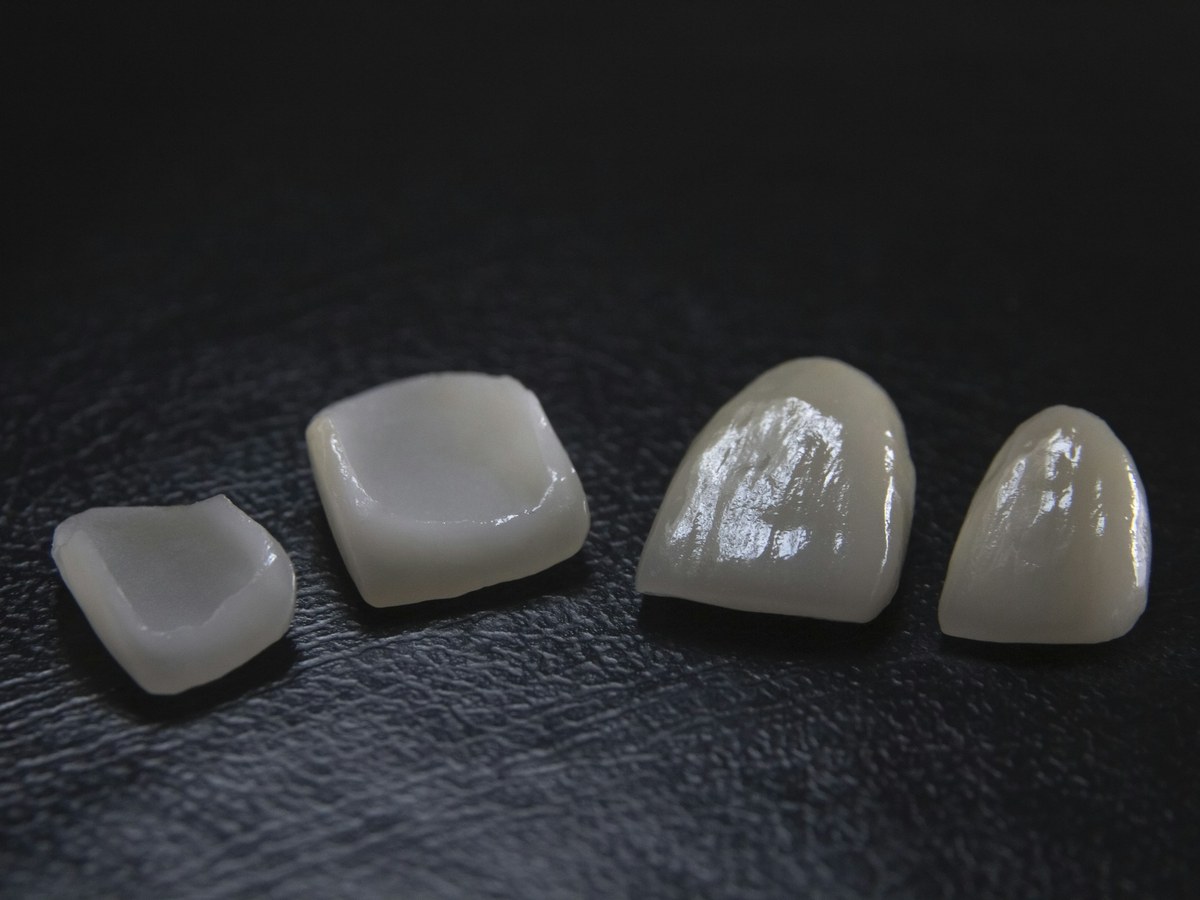
A veneer is a thin shell, usually made of porcelain, bonded to the front surface of a tooth. It changes what you see, which means it can alter color, shape, length, and apparent alignment. It does not move a tooth biologically the way orthodontics does, but it can visually compensate for mild spacing or positioning concerns.
This is where expectations need to be realistic. Veneers are excellent for cosmetic refinement, but they are not the answer to every smile problem. If a patient has severe crowding, active gum disease, untreated decay, or a bite that places extreme force on the front teeth, those issues need attention first. Cosmetic work lasts longer and looks better when the foundation is healthy.
Porcelain remains the standard for many veneer cases because it reflects light in a way that resembles natural enamel. That light behavior matters more than people think. Teeth are not solid blocks of white. They have depth, internal variation, and a slight glow at the edges. High-quality porcelain can mimic that. Composite bonding can also improve appearance, sometimes very effectively, but porcelain tends to offer better stain resistance and durability over time.
For subtle smile enhancements, the goal is usually not to place veneers on every visible tooth. Sometimes two veneers are enough. Sometimes four. In some cases, one veneer combined with whitening and reshaping on neighboring teeth creates the best result. Good cosmetic planning is not about selling the highest number of restorations. It is about solving the visible problem with the least aggressive, most coherent approach.
When veneers are a smart choice
Veneers tend to work especially well for cosmetic concerns that are limited to the front teeth and visible in conversation or photos. The key is that the underlying tooth must be healthy enough to support the restoration.
Here are a few situations where veneers often make sense:
- small chips or worn edges on front teeth
- discoloration that does not respond well to whitening
- minor gaps between front teeth
- slightly uneven tooth shapes or lengths
- mild visual misalignment when orthodontics is not desired
Those indications may sound simple, but the details matter. A small chip at the corner of a central incisor is not just a chip. It changes symmetry, edge position, and the way the smile catches light. A tooth with deep intrinsic discoloration may still look dark even after repeated whitening. A narrow lateral incisor can make the front teeth look crowded even when they are not. Veneers can address each of those issues in a controlled, highly visible way.
That said, not every patient who qualifies clinically is a good veneer candidate aesthetically. Some people want a result so “perfect” that it stops looking human. Others are uncomfortable with even minimal enamel removal and may be better suited for conservative bonding or orthodontic treatment. Matching the treatment to the person matters as much as matching it to the tooth.
The difference between subtle and obvious veneers
Patients often fear veneers because they have seen examples that look too large, too bright, too opaque, or too square. Those outcomes do happen, but they are not inevitable. They usually come from design choices rather than the concept of veneers itself.
Subtle veneers respect a few principles. First, they fit the face, not just the dental arch. A broad smile on a larger face can handle stronger tooth shapes than a delicate smile framed by thinner lips. Second, they preserve variation. Real teeth are sisters, not identical twins. The two front teeth should relate to each other closely, but a natural smile still has small distinctions in contour and light reflection. Third, they account for age. Teeth naturally flatten and darken over time, so making a mature patient look like they suddenly have the enamel characteristics of a teenager can feel discordant.
Shade is where restraint matters most. Many patients begin by asking for “white teeth,” then change course once they see side-by-side examples. Bright is not always youthful. Sometimes a slightly softer shade with more translucency looks healthier and more expensive because it resembles natural enamel. When people say they want veneers that no one notices, they usually mean they want people to notice their smile, not their dental work.
Minimal prep, no-prep, and what those terms really mean
Marketing around veneers can be confusing. Patients often hear “no-prep veneers” and assume that means a universally better option. It is not that simple.
Traditional veneers usually require some enamel reshaping so the porcelain can sit naturally without making the tooth look bulky. In many cosmetic cases, that reduction is modest, but it still needs to be done thoughtfully. Minimal prep veneers reduce less tooth structure, which can be a major advantage when the case allows it. No-prep veneers avoid reduction entirely, but only a narrow group of cases can absorb that added material without looking overcontoured.
A common example helps. If a patient has slightly small, somewhat tucked-back lateral incisors, additive veneer treatment may work beautifully because the porcelain builds a tooth outward into better alignment. If a patient already has full, prominent front teeth and asks for veneers with no prep, the result can look thick and unnatural. The treatment is the same in name, but the design logic is completely different.
This is why a proper consultation matters. The decision is not between “good veneers” and “bad veneers.” It is between the right veneer design for a specific smile and the wrong one.
The consultation is where good cosmetic dentistry starts
When people search for Veneers Oxnard CA, they often compare before-and-after photos first. That makes sense, but photos only tell part of the story. The consultation reveals whether the planning is careful or generic.
A useful veneer consultation should cover the patient’s concerns in plain terms. Which teeth bother them most? Is the issue shape, color, wear, spacing, old fillings, or a combination? What result feels natural to them? Some patients bring reference photos, which can be helpful, not because anyone should copy another person’s smile exactly, but because preferences are hard to describe. One person’s idea of “subtle” is another person’s idea of “too white.”
Good planning also involves facial analysis and bite evaluation. A smile exists in motion, not in a still frame. How much tooth shows at rest? How high does the upper lip rise when smiling? Are the edges of the front teeth visible when speaking? Is there evidence of grinding or clenching that could shorten the life of cosmetic work? These factors change the treatment plan.
In stronger cosmetic practices, mock-ups and provisional designs can help patients preview changes before final porcelain is made. This is especially valuable for subtle cases. If you are changing only a few millimeters, those millimeters matter. Slightly more edge length can make a smile look younger. Slightly less can preserve a mature, understated look. Seeing that in the mouth is different from imagining it.
How many veneers are usually needed?
There is no fixed number. That is one of the most persistent misconceptions.
Some patients need only one veneer, though matching a single central incisor can be technically demanding. Others do best with two veneers on the central incisors for balance. Four veneers can address the front teeth most visible in conversation. Six to eight may be considered when a patient shows more teeth when smiling and wants broader symmetry.
The decision depends on visibility, color match, and existing tooth condition. If one tooth is noticeably darker and the neighboring teeth are healthy and attractive, it may be unnecessary to veneer multiple teeth. On the other hand, if several front teeth differ in color, shape, and wear, limiting treatment too much can make the restored tooth stand out instead of blending in.
Patients are sometimes surprised to learn that doing less can be harder, not easier. A single veneer must disappear into the smile. That requires careful shade selection, ceramic layering, contour control, and attention to the surrounding enamel. Cosmetic dentistry at the subtle end of the spectrum often demands the most discipline.
What the process typically feels like
For most healthy adults, veneer treatment is straightforward, but it is still a process rather than a same-day cosmetic shortcut. The exact timeline varies, yet many cases unfold over two main appointments after planning is complete.
The first phase focuses on records, design, and tooth preparation if needed. Photographs, impressions or scans, shade selection, and bite records are usually taken. If enamel reshaping is part of the plan, it is done conservatively and with local anesthesia when appropriate. Temporary restorations may be placed depending on the case.
That temporary period is more informative than many patients expect. It gives both the patient and dentist a chance to evaluate length, shape, speech, and comfort. If the edge feels too long when speaking or the contour seems too full near the gumline, refinements can often be made before the final porcelain is delivered.
At the final appointment, the veneers are tried in, evaluated from multiple angles, and then bonded. Bonding is a precise step. Moisture control, surface treatment, cement shade, and cleanup all affect the end result. The difference between a veneer that merely fits and one that integrates beautifully often comes down to careful execution at this stage.
Most patients adjust quickly. Teeth may feel “different” at first simply because the surfaces are smoother or the edges are more even. That sensation usually settles as the mouth adapts.
Longevity, maintenance, and the habits that matter
Porcelain veneers can last many years, but they are not permanent in the sense of being maintenance-free. Their lifespan depends on planning, bite forces, oral Veneers Oxnard CA hygiene, and material quality. It is reasonable to think in terms of long-term service rather than lifetime guarantees.
Patients who do best with veneers tend to treat them like natural teeth with a bit of extra respect. They brush, floss, keep regular exams, and avoid using their teeth as tools. If they clench or grind, a night guard may be important. Front teeth, even restored ones, are not designed for opening packages, biting fingernails, or cracking ice.
A few practical habits make a difference over time:
- wear a night guard if grinding or clenching is present
- avoid tearing hard packaging with front teeth
- keep up with regular cleanings and exams
- address gum inflammation early
- report any rough edge or looseness promptly
Gum health deserves special mention. Veneers can look excellent on day one and disappointing a year later if the surrounding gums are inflamed or receding. The porcelain may still be fine, but the frame around it has changed. Cosmetic work always depends on biology.
Staining is another area where patients need realistic expectations. Porcelain resists stain better than natural enamel and far better than many composite materials, but the teeth next to the veneers can still darken over time. That is one reason shade planning should avoid extremes. A very bright veneer next to natural teeth creates maintenance challenges later if the natural enamel shifts in color.
Veneers versus bonding, whitening, and orthodontics
Veneers are not automatically the best cosmetic option simply because they are popular. The right treatment depends on what is being corrected and how conservative the patient wants to be.
Whitening works well for generalized external staining, but it cannot fix shape, chips, old mismatched fillings, or significant intrinsic discoloration. Bonding is more conservative and often less expensive upfront, making it a useful choice for small chips, edge reshaping, or minor gap closure. Its limitations are durability and stain resistance, particularly in high-visibility areas over many years.
Orthodontics actually solves alignment problems rather than masking them, which can be the better route for younger patients or anyone with moderate crowding and a healthy timeline. Sometimes the most elegant cosmetic plan starts with aligners and ends with very limited bonding Veneers Oxnard CA or one or two veneers. Patients are often relieved to hear that they do not need eight veneers to achieve a cleaner smile.
There is also a middle ground that does not get enough attention: enamel recontouring. Tiny adjustments to edge shape or contour can make a smile appear more even with no restoration at all. In the right case, that kind of restraint is a mark of sound judgment.
Cost and value, without the sales pitch
Patients understandably ask what veneers cost, and the honest answer is that fees vary based on the dentist’s training, the materials used, the complexity of the case, and the number of teeth involved. A highly individualized cosmetic case generally costs more than a straightforward one because it requires more planning, more communication with the lab, and more time refining detail.
The more useful question is often what drives value. A veneer that looks bulky, mismatched, or unstable is expensive even if the fee was low. A well-planned restoration that blends naturally and functions comfortably for many years is usually money better spent. Cosmetic dentistry is one area where shortcuts show.
It is also worth remembering that replacement costs matter. Redoing poorly designed veneers can be more invasive than doing the original case properly. That is especially true when excessive tooth reduction or gum irritation enters the picture. Conservative, thoughtful treatment tends to age better.
What to ask before moving forward
Choosing a provider for Veneers Oxnard CA is not just about finding someone who offers the procedure. It is about finding someone whose cosmetic judgment matches your goals.
Ask how often they handle veneer cases focused on natural-looking results. Ask to see examples similar to your concerns, not only dramatic smile makeovers. Ask whether they use previews, temporaries, or mock-ups. Ask what alternatives they would consider if veneers were not the best option. A good cosmetic dentist should be able to explain why veneers are appropriate, and just as importantly, when they are not.
Pay attention to how they talk about your teeth. If the conversation jumps immediately to a full set of veneers without a clear reason, that is a signal to slow down. If the discussion includes enamel preservation, bite forces, gum health, shade harmony, and long-term maintenance, you are likely in a more thoughtful planning environment.
The best veneer cases often begin with a patient saying, “I want this to look like me, only better.” That is a smart instinct. Cosmetic dentistry is at its finest when it refines rather than overstates.
A natural smile can still be improved
Some of the most gratifying cosmetic cases are the ones nobody else can identify. A chipped edge is gone. A tooth that always photographed dark now blends in. A narrow lateral incisor finally fits the smile. The patient stops angling their face a certain way or covering their mouth when they laugh. There is no theatrical reveal, just a sense of relief.
That is the quiet power of veneers when they are used well. They can correct what distracts the eye while preserving what already works. For people considering veneers in Oxnard CA, that understated approach is often the right one. Better, not bigger. Brighter, not artificial. Refined, not obvious.
A subtle smile enhancement asks more of the planning, the materials, and the clinician’s restraint, but the result can feel remarkably effortless. And that, for many patients, is exactly the point.
Oxnard Dentistry
1730 E Gonzales Rd, Oxnard, CA 93036, United States
+1 805-307-8731
FAQ About Veneers Oxnard CA
How long do porcelain veneers last?
Porcelain veneers can last for many years, but they can chip, loosen, or wear over time. Their lifespan depends on factors such as your bite, whether you grind your teeth, and daily care. Regular dental visits let your dentist check their condition.
Are dental veneers permanent?
Traditional veneers often require removing a small amount of enamel, so that change to the tooth is generally irreversible. Veneers can still need repair or replacement. Ask your dentist how much preparation your teeth would require.
How much do veneers cost in Oxnard?
Cost depends on the material, how many teeth you want treated, and whether you need other dental work first. Ask for a written estimate that explains the price per tooth and what is included.